Features that now a days cameras should have

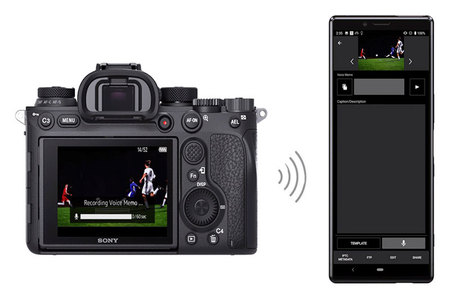
1.Voice Memos

Practically every camera these days has a microphone and a storage device. So why has it taken so long for voice memos to find their way to the masses?

High-end professional cameras have had voice memo options for ages. A quick Google search tells me it existed on the Canon EOS-1D Mark II in 2007 and the Nikon D2X in 2004, and maybe even on some earlier cameras.

Voice memos aren't something everyone would use, but for documentary photographers, wedding photographers, and a few others, they can be a big help.

I'm glad to see Nikon adding voice memos to some of their less expensive cameras via a firmware update, including the Nikon Z6 that was released a few years ago. Hopefully more camera companies follow suit.
2.GPS

A lot of cameras are compatible with external GPS units that can tag your photos as you take them, but there's no reason for the extra expense and annoyance of a dongle. To me, the proof is in point-and-shoot cameras. So many of them have built-in GPS, even cameras from more than a decade ago. If companies could add it to such basic cameras for so long, why isn't everyone adding it to higher-end cameras today? (Maybe this next part is asking too much, but I'd also like to see the GPS sync your current location with the camera's clock, so you don't need to change the time in the menu each time you go to a different time zone.)

At least GPS is found on more cameras than some of the other features on this list. But it should be as common as WiFi and bluetooth - and it shouldn't require you to sync your camera to your smartphone in order to piggyback on the phone's GPS.

3.Sensor Shift High Resolution

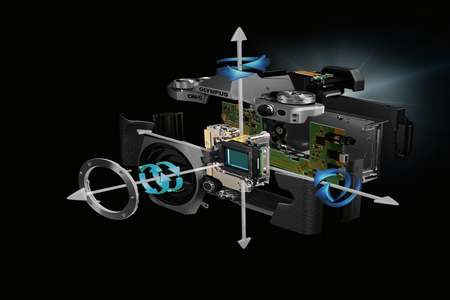
One feature that's gotten a lot of attention recently, and is found in increasingly more cameras, is a pixel-shift high resolution mode on cameras with in-body image stabilization. This mode takes multiple photos in a row with slightly different sensor positions, then merges them together to increase resolution substantially. On most cameras with pixel-shift, you can quadruple the sensor's native resolution.

4.Multi-Axis Tilting Camera Screen

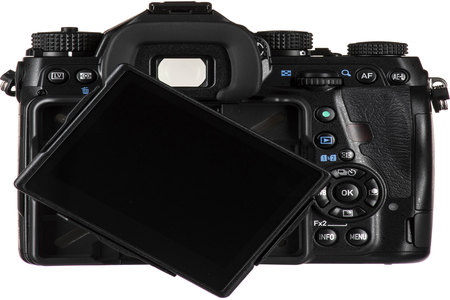
As a landscape photographer, I've found tilting camera screens to be a huge ergonomic improvement in recent cameras. And while almost every camera these days has at least a single-axis tilt, not enough of them can tilt sideways. For vertical photography, this sideways tilt is a big help. I'd like to see multi-axis tilting screens (or fully articulating screens) find their way to more cameras in the future. Although a lot more cameras have it these days, a few companies still lack it in some of their most important cameras (like the Nikon Z7 II and Sony A7R IV).

5.Animal-Eye-AF

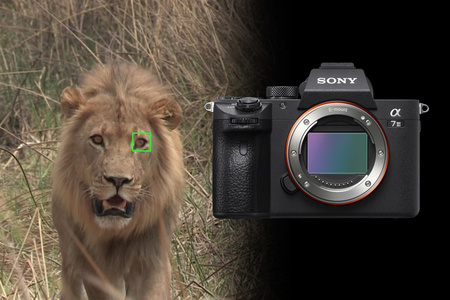
Most new cameras have eye-AF capabilities that can track the eye of the person you're photographing. Animal-eye-AF, though, is rarer.

I admit that this feature may not be necessary once you master the standard tracking capabilities of your camera, but it's still something I'd like to see more often. Not all photographers are pros who have hundreds of hours to spend learning their camera's tracking capabilities inside and out, so a bit of a head start like this can be nice.

6.Sensor Dust Protector Curtain

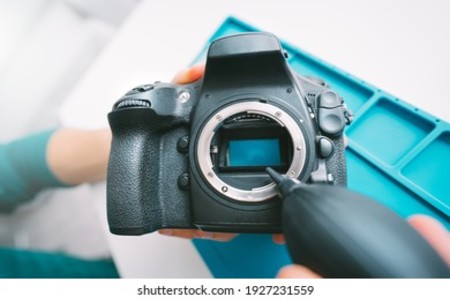
I've found when shooting mirrorless that my sensor gets dirty more often compared to using a DSLR. It's not a big pain to clean it, but I'd rather worry about other things when I'm out in the field.

I'm sure someone will correct me on this, but as far as I know, the first camera with a dust- protection curtain was the Canon EOS R. When you remove the lens on the EOS R, the shutter curtain closes in order to protect the sensor from the outside world, including dust.

Other cameras have added this feature in the meantime, including the Nikon Z9 (which doesn't even have a mechanical shutter and instead uses a dedicated dust protection curtain for the job). I hope it becomes standard issue on all mirrorless cameras, and frankly, even on DSLRs.

7.Illuminated Buttons

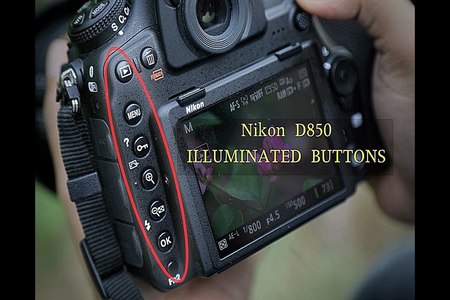
I'll be the first to say that you should learn how to use your camera with your eyes closed. You should instinctively know the location of every button and dial, or you'll miss some shots in fast-moving conditions. However, for Milky Way photography or other shoots in pitch-black environments, backlit illuminated buttons can still be very useful. It certainly beats a bright headlamp that can shine into your photo or just ruin your night vision.

A few cameras have illuminated buttons, and the Pentax K-1 series even has a small light that illuminates the camera lens mount! For changing lenses at night, this makes things a lot easier. I'd like to see both these features on landscape-oriented cameras in the future.

8.Bulb Mode Preview

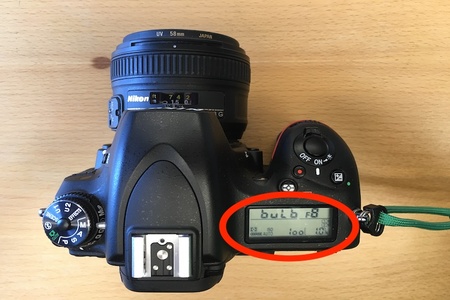
Some cameras show a live preview of how your exposure is building up during a Bulb or Time exposure. This is a helpful way to tell when to end an ultra-long exposure rather than spending lots of time with trial and error. This is a big win for Olympus including such a feature when most camera companies don't!

Conclusion

One thing that impressed me while working on this article is that the unique features I've listed here are spread out among camera brands pretty evenly (although Olympus gets the nod for having the most). To me, this shows that every camera company has something good to offer and they can still learn from one another when making new cameras. Now it's just time to put that into practice! Let's see a camera that has all these features and more. I'm sure there are many possible features that I can't even begin to guess, which aren't on any camera today.

Are there any that I missed, or some feature you're especially hoping reaches your next camera? For my landscape photography, I'd personally love to see a camera with raw histograms and vibration detection when firing the shutter, unlikely though it may be. But I'd frankly be excited if any of these features become more widespread. After all, as I said at the start of the article, the technology is already here -all we need is for today's camera companies to bring it all together.